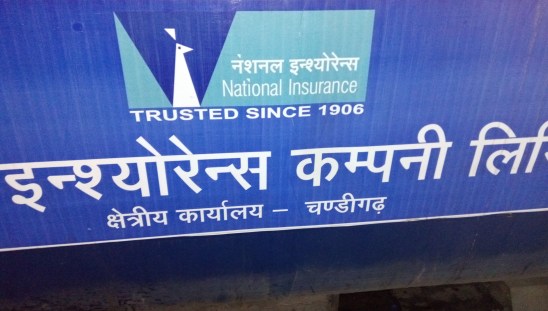
Since vs. for


since


At times, I have heard: “I’ve been working here from 2015.”

Actually it should be: “I’ve been working here since 2015.”

Or one can say: “I’ve been working here for two years.”

Here is how since and for are used:

since + point in time       (since 1906)

for + period of time        (for 10 years)

We do use from with time expressions, but in a different sense. Here are some examples:

The conference starts from tomorrow. 

The shop is open from 9:00 am to 5:00 pm. 

And yes, by now you know why the ad is correct: Trusted since 1906.

In fact, from now on, you know the difference between since and for.


“He has a chip on his shoulder.” or does he?

blue chip

This is a commonly used idiom: he has a chip on his shoulder.

Some people use it to indicate that he is behaving arrogantly, normally due to his success or position. Perhaps they are making a connection between the chip on his shoulder and a microprocessor chip or a blue chip stock. Actually, this is not the meaning of the idiom.

It is not related to being arrogant.

When someone has a chip on his shoulder, he is angry or feels disrespected. And he feels angry/disrespected because he is under the impression that he has been treated unfairly in the past.

And that is what it means to have a chip on one’s shoulder.

A venture capitalist once said that he looks for an entrepreneur who has a chip on her shoulder, as this means that she will try even harder to succeed. Does that make sense?

How many idioms related to war can you think of? Learn about four of them here.

How many Indianisms can you find in this letter?

out of station

There are three Indianisms in this letter. They are:

  1. out of station

Instead one can say: out of town.

2. kindly

This is a very common word in India. Nothing wrong with it, but do keep in mind that outside India, people usually say please instead of kindly.

3. the same

This, like kindly, is a classic example of Indianism. Instead of ‘the same’ one can say: ‘it’.

And so, the full sentence reads:

Please resend it.

For more on Indian English, check out this post

3 common errors in business email writing

You need to be professional in your communication. It is important not to make errors while writing business emails. If you do make them, it will reflect negatively on you. Make sure that you are not making these errors:

3 common errors in business email writing

Here are three common errors that many people make:

1. This email is with regards to your visit.

It should read: … with regard to your visit.

We use the word ‘regards’ when we say: “Send him my regards!”

Or, when we sign off  on an email:

Regards,

Payal

    2. I am looking forward to meeting you.

The phrase, looking forward to, is informal.  We use it when communicating with friends. For example: I’m looking forward to meeting your cousin.

If you wish to have a more formal tone, then write:

I look forward to meeting you.

Note that it should not read: I look forward to meet you.

The verb should always end in -ing. For example:

I look forward to receiving the book.

I look forward to speaking with you.

In this structure, instead of  a verb (speaking, receiving), we can use a noun.

For example:

I look forward to your reply.

I look forward to the presentation.

3. For any clarification, contact me. 

This is informal, and it is okay among friends / colleagues (who are friends).

If you wish the tone to be more formal, write:

If you need any clarification, do not hesitate to contact me. 

If you need any clarification, please call me at 86393389. 

If you need any clarification, please send an email to Tony at: abc@xyz.com

 Do not write: If you need any clarification, please contact the undersigned.

In this case, we normally treat clarification as an uncountable noun, so do not add an ‘s’ at the end. 

This sounds like a lot of work. The reader will first have to find who this mysterious ‘undersigned’ is.

Remember, in general, try to keep your business communication simple and straightforward.

For more in-depth information on the topic, read how to improve your email writing skills.

Uncountable nouns

Fruits

On a chilly winter evening in New Delhi, I saw this sign blazing in the dark. ‘Fruit’ is an uncountable noun. And if the owner wished to be grammatically correct, the sign should have read “Shakti Fruit.’

But what are uncountable nouns?

Uncountable nouns are nouns that cannot be counted.

They can be either abstract nouns (love, peace) or concrete nouns (sugar, furniture).

Here are the main points you need to keep in mind:

a. With an uncountable noun, we do not use an ‘s’. And so, we cannot have ‘fruits’.

b. We cannot use indefinite articles (a,an) with uncountable nouns.

We should not say: a fruit.

Let’s look at some common errors made with uncountable nouns:

  1. “Can I ask for an advice?”

This is incorrect. Advice is uncountable.

You should say: “Can I ask for some advice?”

2. The ten equipments are in the storeroom.

Equipment is uncountable.

Instead, we say: The ten pieces of equipment are in the storeroom.

3. She knows a lot about Japanese business etiquettes.

You guessed it… Etiquette is an uncountable noun.

The sentence should read: She knows a lot about Japanese business etiquette.

And now, I’m sure that you can identify the grammatical error in this photo:

equipments

For more on Indian common errors, check out my book.

Watch this video for more on uncountable nouns.

When do I use an apostrophe?

apostrophe

This message is from my local gym. What caught my eye was the unnecessary apostrophe in ‘Saturdays’.

Apostrophes are terrible easy to use. And yet, there are often misused. As in most things in life, you just have to be clear as to how to use them. Let’s find out.

3 ways to use an apostrophe

1. To show possession 

girl’s (singular)     girls’ (plural)

2. After time expressions

One week’s time

Two weeks’ time (note that the apostrophe in this case comes after the ‘s’)

3. For informal speech 

do not   becomes  don’t 

I am becomes I’m 

you are becomes you’re 

Pay attention when you see: it’s

It’s can be ‘it is’ or ‘it has’. It depends on the context.

Look at these two examples:

a. It’s raining! (It is)

b. It’s been nice speaking with you. (It has)

And that’s all

If you wish to write anything in its plural form, such as protein shakes, push-ups, and Saturdays, there is no need to add an apostrophe. Don’t do it.

And yes, there are exceptions. We use apostrophes when we talk of minding your P’s and Q’s. But, I think you knew that already…

Not sure about its vs. it’s?

Spot the Indianism in this photo

Departmental

Indianisms are words / phrases that are particular to India.

In this photo, departmental is an Indianism.

In the US, the word would be replaced with department.

We do use the word departmental, but in a different context. For example, Rani attends a departmental meeting. After the meeting, she buys accessories at a department store.

There are other words and expressions which qualify as Indianisms:

    1. No issues. This is fine when used among Indians. If you work in an international setting, you could say instead: ‘no worries’ or ‘no problem’.
    2. Concerned department. Concerned person. In the US, people say relevant department or relevant person. To my ears, this sounds better.
    3. Godown. In the US and UK a godown becomes a warehouse. 

Have you ever wondered just how Indian your English is?

A very common error in English

Qasim

The photo is of a bridge near my home. If you can peer through the Delhi smog, you’ll spot some writing: Qasim love Shasli.

I wish Qasim well. But, I would like to point out a grammatical error. It should read: Qasim loves Shasli.

This type of grammatical error happens when the subject and verb do not agree. The absence of subject-verb agreement is a very common error.

Let’s look at the verb: to love. Here are its different forms in the present tense:

I love

You love

He loves / She love

Qasim loves / Shasli loves

We love

You love

They love

Other verbs receive the same treatment. I like becomes Rahul likes. And I meet becomes she meets.

The next time you hear someone speak, keep your ears peeled for subject-verb agreement. You may be surprised to hear how many times the subject and verb just don’t agree!


IELTS Preparation Resources

Many candidates find IELTS to be challenging. If you prepare well, you can do well. Here are some tips:

  • Practice your paraphrasing skills. This will especially help you in the writing section.
  • Use simple language. You do not have to use fancy words to do well. If you do use advanced vocabulary, make sure that you know what it means.
  • Read the question! Many times, candidates start answering the question they are expecting, and not the question that has been asked. When you do this, you go completely off topic.

Many candidates ask: What should I study to prepare for IELTS? 

There is a lot of material out there, and it can get overwhelming at times. Here are some IETLS resources that I strongly recommend.

If you are serious about getting a high band, do consider purchasing this book:

Official Guide to IELTS It’s published by Cambridge. And it will give you a good idea as to what types of questions to expect and how to answer them.

Here are some helpful websites:

The official IELTS website has sample tests and other resources. I highly recommend it. 

 IELTS Liz is a popular website with tips and practice lessons.

TakeIELTS from British Council has many helpful videos. Do visit. 

This British Council post has useful tips and strategies for succeeding in IELTS.

Watch this video for IELTS reading: 

When to use a semicolon

A semicolon on a desk

When do I use a semicolon?

This is an excellent question. Using semicolons can be tricky.

Before I answer that question, let’s take a step back.  We have to revise what an independent clause is. 

An independent clause:

  • has a subject and a verb;
  • makes complete sense on its own.

Here is an example of an independent clause:

Amir made the presentation.

This is an independent clause. There is a subject (Amir) and verb (made). And it makes sense on its own.

Have you noticed that an independent clause is a simple sentence?  Yes, it is! 

Is this an independent clause?

Although we finished the report. 

This is not an independent clause. Yes, there is a subject (we) and a verb (finished). However, it just does not make any sense on its own!

It’s a dependent clause. There needs to be more information for it to be complete in meaning. So, it is not an independent clause. 

Now that independent clauses are out of the way, let’s focus on semicolons.

Two common uses of the semicolon

We use a semicolon to connect two independent clauses

Amir made the presentation; the client decided to accept our proposal.

Here, we have two independent clauses joined by a semicolon.

Do you like the look and feel of this sentence? If you do, then use a semicolon in your next email. 

Is this sentence grammatically correct?

Although we finished the report; I was unable to upload the file.

No, it isn’t. ‘Although we finished the report’ is a dependent clause. As you now know, a semicolon joins two independent clauses. 

In case you are wondering about that sentence–the semicolon needs to be replaced with a comma. 

A semicolon joins two simple sentences that are closely related in meaning. 

Using a semicolon to divide a list 

This is a list of speakers for the panel discussion: Ms. X, CEO of Kaboo; Dr. L, Professor of Semicolons at University of Row; Mr. O, COO of Bow Wow.

Now imagine we replace all semicolons with commas.

This is a list of speakers for the panel discussion: Ms. X, CEO of Kaboo, Dr. L, Professor of Semicolons at University of Row, Mr. O, COO of Bow Wow.

Are you as confused as I am? I certainly hope so…

I don’t know whether the CEO of Kaboo is Ms. X or Dr. L or whether the CEO of Kaboo is another person altogether!

We could spend a whole day trying to figure out who is who. Thankfully, with semicolons, the list becomes crystal clear. 

Do you have to make such complicated lists? If so, think semicolon. 

To conclude… 

Some people find semicolons to be pretentious. I find them to be elegant. It’s satisfying to see a dot hover over a comma. 

In terms of meaning in the world of punctuation, a semicolon is somewhere midway between a comma and a full stop. 

Here is a detailed post on the use of semicolons

If you find them attractive, use them in your writing. The world would be a better place with more semicolons.

Make sure you are not making these common errors in punctuation.