I'm an English language trainer based in India.
I'm a bookworm and enjoy reading fiction, history, art, and much more. I like to doodle. Despite my best efforts, I draw like a 5-year old.
I do enjoy swimming, especially when it is raining.
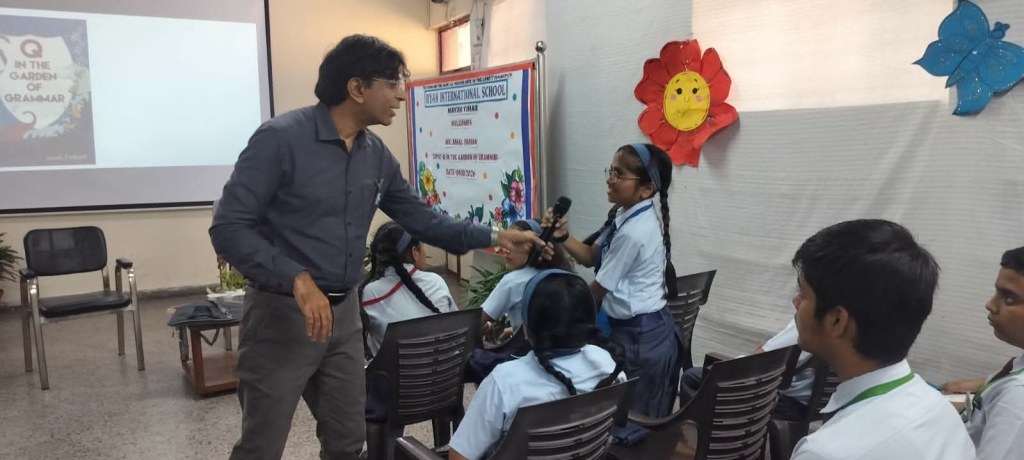
A book talk on ‘Q in the Garden of Grammar’ at a school in Delhi.
Had an enjoyable time speaking with the students of Ryan International School. I spoke about my book, Q in the Garden of Grammar. The students asked a range of thoughtful questions. They asked how they could improve their communication skills. And a few asked how to become a writer.
It was encouraging for me to hear these kinds of questions. The best time to build your foundation in language is when you are young. If you create a strong foundation in grammar, it will benefit you for the rest of your life.
Are you a parent of a school-going child? If yes, I would urge you to read this post on the importance of grammar.
Decide which of these five sentences below are correct.
If a sentence is incorrect, think why it could be incorrect.
Are you ready? Start.
Pop Quiz
1. The talk on the importance of grammar was a bit boring.
2. Your sense of style is very perfect.
3. The eco-friendly clothes at the fashion show were absolutely fabulous.
4. The report on the effects of doomscrolling is very important.
5. His plan to complete the survey within three days is incredibly impossible.
Scroll down for answers.
Answers:
correct. Boring is a gradable adjective.
incorrect. Perfect is a non-gradable adjective.
correct. Fabulous is a non-gradable adjective.
correct. Important is a gradable adjective.
incorrect. Impossible is a non-gradable adjective.
Now, what on earth are gradable and non-gradable adjectives?
Let’s start with the gradable ones.
Gradable adjectives
Gradable adjectives can be expressed in different degrees. They are graded. Take the adjective– boring.
You say:
Learning grammar is a bit boring.
Learning grammar is really/very boring.
Learning grammar is extremely boring. / Learning grammar is incredibly boring.
Do you notice how there is an increase in degree as we go down the list? By the way, I hope you don’t find grammar to be incredibly boring.
Other common gradable adjectives are: good, bad, and interesting.
Do you use the adjective interesting a lot?
You could say:
The documentary on bees was pretty interesting.
The Nigerian novel I read was very interesting.
The business idea the students have is extremely interesting.
To end this section, just remember that you use these intensifiers with non-gradable adjectives:
a little / a bit
pretty/quite
really/very
extremely / incredibly
Time to look at those non-gradable adjectives.
Non-gradable adjectives
Non-gradable adjectives are adjectives that are at the highest level. Unlike gradable adjectives, they have no degrees. They are absolute.
I’m sure you must be thinking of examples of non-gradable adjectives.
Here are a few of them: fantastic, fabulous, brilliant, excellent, and perfect.
There are times when we want to emphasize even non-gradable adjectives. We do this especially when speaking. To emphasize a gradable adjective, we use these intensifiers: absolutely, completely, and totally.
That’s why, sentence no. 3 from the pop quiz is correct:
3. The eco-friendly clothes at the fashion show were absolutely fabulous.
By the way, Absolutely Fabulous is the name of funny British sitcom from the 1990s. That’s the poster at the top.
Back to non-gradable adjectives. You could say: That’s completely impossible. (Sentence no. 5 from the pop quiz.)
Here is another sentence from the quiz:
2. Your sense of style is very perfect.
If you remember, it’s incorrect. But, why? Because, we use very only with gradable adjectives. For example: It is very cold outside.
Sentence 2 could be rewritten as: Your sense of style is absolutely perfect.
Doesn’t that sound better?
Remember: we do not use very with non-gradable adjectives.
Now for some good news. There is an an intensifier that is used with both gradable and non-gradable adjectives. The intensifier is: really. So, you say:
She is a really brilliant engineer. (non-gradable adjective: brilliant)
The art show was really interesting. (gradable adjective: interesting)
The takeaway
There are two kinds of adjectives: gradable and non-gradable.
With gradable adjectives, we use intensifiers such as a bit, pretty, very, extremely, and incredibly.
With non-gradable adjectives, we use intensifiers such as: absolutely, completely, and totally.
The intensifier really goes with both kinds of adjectives.
Now that you know the difference between gradable and non-gradable adjectives, start to notice them around you.
Notice the adjectives you use. Do you use non-gradable adjectives a lot? If not, are there any ones that you would like to start using?
Similarly, notice the adjectives your friends, colleagues, and clients use.
Notice the adjectives that are used in ads. Advertisers love using non-gradable adjectives.
Keep improving your grammar and always remain–absolutely fabulous!
Would you like to brush up on the use of prepositions? Click here.
I have been teaching English for fifteen years now. Over the years, I have noticed some positive traits and approaches of good language learners. What we will cover is based on my experience teaching English, but these points would be relevant when learning other languages as well.
4 points to keep in mind when learning a language
1. Have a positive attitude
Learning a new language is rewarding in itself. You learn new sounds. You learn new words and idioms. You learn new grammatical forms. In short, you learn a new way to express yourself. A new horizon opens up.
I remember a student telling me that she didn’t enjoy learning English, and that she was learning the language only because she had no choice. As you could guess, learning English is a chore for this person. This internal resistance will work against her learning the language well.
If you are learning a language, do not view it as a burden. Relish the sounds of the new words. Enjoy the process. It’s always a pleasure to be a student, whatever your age may be.
2. Be persistent and patient
If there is a word that you find difficult to remember, write it down. Keep practising it during the week. If there is a grammar point that is tricky, take your time. Slow down. Spend a minute or two to better understand it. Make a sentence with it. If you make a mistake, no worries. Try again. The more persistent you are are, the more your mind becomes familiar with what you are learning. Give your mind time to absorb the new information.
I have met students who are impatient when it comes to learning English. At times, they overestimate their level of English. They are in a hurry to become advanced-level speakers. Don’t be. Being impatient is not going to make you learn the language any faster. In fact, you may get demotivated when you find that you are not improving as much as you thought you would.
Persistence is the path that will get you there.
3. Celebrate small wins
After many attempts, you use the present perfect tense correctly when speaking. Celebrate the win! After repeated mistakes, you use a preposition correctly. You say, ‘I’m in the car’, instead of ‘I’m on the car’. Celebrate the win! I’m not saying you have to eat a slice of cake. But, just recognize that you have achieved something, however small it may be.
If you have been learning a language for some time, your errors may be fossilized. When you finally get a word or grammar point right, pat yourself on the back.
4. Immerse yourself
Immersion is the secret to learning any language. Imagine you are in a country where people only speak a foreign language. Your learning curve will be steep.
All of us may not have the opportunity to live in a foreign country. But, we do have access to the internet. Watch YouTube videos. This would include: the news, short clips, songs, documentaries, comedy series, and yes, even cartoons.
When listening, be an active listener. If you are a beginner in the language, see if you can identify any words. Listen to the sounds of the language.
If you are at the pre-intermediate, intermediate level, or upper-intermediate level, you could keep your ears tuned for new words. You can try to guess their meaning from the context. Don’t worry if you are not sure of the meaning of the new word or phrase. By using your mind to guess the meaning, you are already on your way to expanding your vocabulary. You can always check a dictionary. My go-to dictionary is Cambridge Dictionary.
Apart from words, pay attention to how words are pronounced. Pay attention to the key words that are stressed in a sentence. Pay attention to how intonation is used.
Notice how grammar is used. In the beginning, try to recognize the grammar that you have already covered. Doing this will help you consolidate your learning. Later, focus on unfamiliar grammar points.
Phew! As you can see, when it comes to language immersion there are a lot of things to do.
I recommend that you take a pro-active role when learning a language. Become an independent learner. Isn’t that the best way?
The takeaway
Enjoy learning a language. Don’t worry if it seems endless. Eventually, with persistence and patience, you will attain your language goals.
Learning a new language can be fun and rewarding or it can be boring and dreary. The choice, dear reader, is yours!
If are a parent of a school-going child, this post is for you.
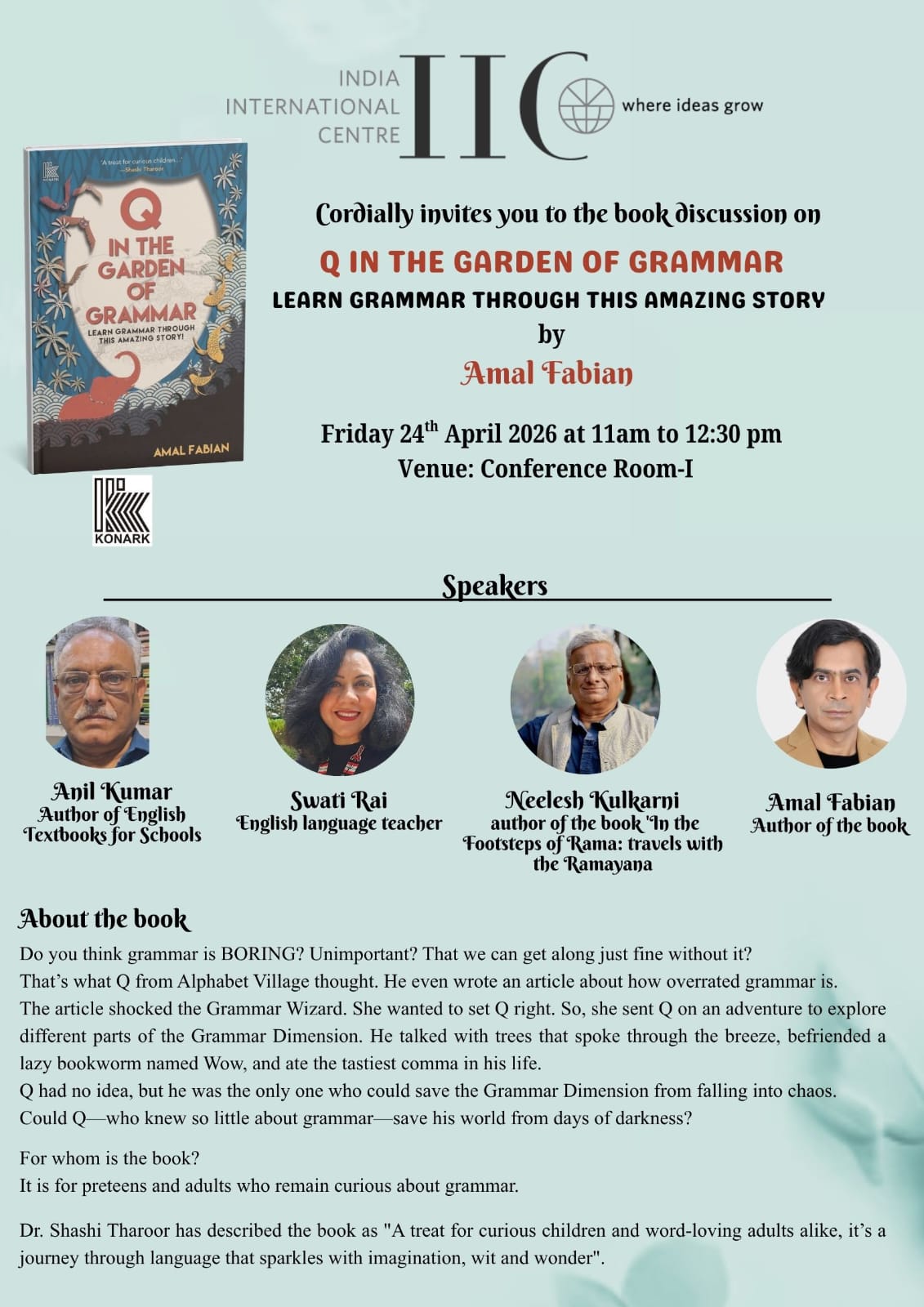
My name is Amal Fabian, an English teacher with fifteen years of experience. An author of two books on English language learning: Q in the Garden of Grammar and Common Indian Errors in Business English. I’ve taught at British Council, Chennai. I’ve been a British Council corporate trainer in Delhi, where I’ve conducted sessions at MNCs, Indian companies, NGOs, and colleges. I’ve been an examiner for an international language test for many years. And I’ve been teaching students online from South America, Europe, the Middle East, Africa, and Southeast Asia.
Can you guess what the main issue that all learners struggle with when it comes to learning English? Not vocabulary. Not pronunciation. The main issue is: grammar. Why? Because if your foundation in grammar is weak, it is difficult to improve your speaking, reading, writing, and listening skills. Your errors become fossilized. Whenever you communicate, grammar pulls you down.
The best time to learn grammar is when you are young. Your mind is fresh. And you are a student by profession. Parents, please remember this. Later on in life, as an adult it is very difficult to improve your grammar. You have lots of responsibilities. You are no longer a student.
Many people overestimate their English skills. People who are at the intermediate level feel that they are upper-intermediate speakers. Parents, keep this in mind: just because your child speaks fluent English, it does not mean that she is not making grammatical errors. These errors get recognized only when she takes an English-proficiency exam such as IELTS. Make sure that these errors are corrected before she takes any of these exams.
Whatever profession your child takes, it is highly likely that she will need to use English for the rest of her life. Focusing on grammar right now will be an investment that reaps benefits throughout her life. Your child needs to have a good knowledge of English to:
To succeed in this age of AI, your child must have excellent communication skills and teamworking skills. This means that she needs to have very good language skills. And that means a solid foundation in grammar.
AI can be used to generate ideas and for routine messages. But beware. If your child is wholly dependent on AI, then her English skills will not develop. They will be stunted. There will come a time in the future when she needs to express her own thoughts using her own words. If her foundation in English is weak, she will find it challenging to express complex ideas and nuances. This may negatively affect her career prospects.
Dear parents, I hope I’ve made my case to you. Grammar is foundational when it comes to communicating in English. Make sure that your child strengthens her grammar. Here are some free websites you can access. When visiting the British Council website, you can check out the section for teens.
The takeaway from this post is this: learn grammar as a child. Do not struggle with it as an adult.
If you have any questions or comments, let me know!
The verb enjoy is followed by a verb in the -ing form.
For example:
I enjoy swimming in lake.
We use the verb enjoy a lot when we speak. So, I want you to remember this:
enjoy + -ing form of the verb.
To consolidate what we have just learned, correct the sentences that need correcting.
They enjoy paragliding.
She enjoys to work in adverstising.
I enjoy playing tennis.
Yes, sentence no. 2 needs to be changed to ‘working’.
Suggest
Now that we know about enjoy, how about suggest?
Which one is correct:
I suggest to read the document more carefully.
I suggest reading the document more carefully.
It’s just the same as enjoy. So, sentence no. 2 is correct.
The form is: suggest + -ing form of the verb.
Time to consolidate what you have learned. Correct where needed:
I suggest to call the client tomorrow morning.
They suggested visiting the warehouse next month.
He suggests postponing the meeting.
Yes, sentence no.1 needs to be altered. I suggest calling ….
Verbs that use both
There are some verbs that go with both the infinitive and the – ing form of the verb.
For example:
I love going for a jog in the morning.
I love to go for a jog in the morning.
Both these sentences are correct. The same goes for ‘prefer’.
For example:
I prefer taking the train.
I prefer to take the train.
You can click away now–if you want to
If that is enough grammar for one day, I understand. After reading this paragraph, click away. Be sure to listen to yourself when using such verbs as enjoy, love, and prefer. Make sure to use the correct form. Bye.
When to use infinitives and -ing forms
If you are interested to learn more, stay for a bit. Roll up your sleaves. We are covering some nuances now.
With verbs such as like, love, prefer, and hate we use both the infinitive form and the ing form. But, there are differences in meaning. You could drink some virtual coffee to stay focused.
Are you feeling (virtually) refreshed? Good.
Let’s get back to talking about when to use the infinitive form and when to use the -ing form.
Read these two sentences:
I like drinking black coffee.
This means that I enjoy drinking black coffee.
2. I like to drink two cups of coffee in the morning.
We use the infinitive form here because we want to talk about habits and choices.
Here’s another example:
Do you like walking in the park?
The question is whether you enjoy walking in the park.
2. Would you like to walk in the park?
You are being offered a choice. Walk in the park, or not.
The end
I hope that last part was not grammar overdose.
Remember ‘enjoy’ is followed by the -ing form. The racoon enjoys watching sci-fi movies.
Remember that some verbs use both the infinitive and the ing forms. It depends what you want to express.
And just like that, your grammar improves!
If you like learning grammar, you could read this post on the state verbs.
While visiting the bookshop Rachna Books in Gangtok, Sikkim I saw these delightful readers. And that got me thinking of the various ways of reading.
That person in a brown robe with a pen in hand seems to be reading for detail. Intensive reading.
On the other hand, the owl behind him seems to be reading for pleasure. Could the owl be reading an engaging novel?
Let’s go through some different ways of reading. I’m sure you use many of these approaches, even if you are not be familiar with their names.
Different ways of reading
Scanning
You do this when when scrolling for a particular name on your phone.
When we are scanning a text, we are searching for a specific piece of information. It could be a name, address, number, or percentage. For example, at the airport, you may be scanning the list of flights on a screen. You stop when you find your flight number.
You may be scanning this post right now–searching for any new pieces of information.
Scanning is a useful sub-skill of reading. It saves time.
But, sometimes, you need to do more. Reading needs to be more meaningful.
Skimming
When you need to understand the main idea of a text–the gist of the text– then skim.
Here are some steps to follow:
Read the title. Look at the photo (if there is one). Predict what the text is going to be about. Take just a few seconds to do this. This helps you prepare your mind to better absorb the text.
Read the first paragraph. This will give you a good idea as to what the writer intends to say.
Read the first sentence for each paragraph. This first sentence is a topic sentence. At times, you may need to read the first two sentences to get a good understanding of the topic of the paragraph. For the time being, ignore detailed explanations and examples. When skimming, you are searching for main ideas. No distractions.
Read the last paragraph. That concludes the text and would contain the main takeaways.
Intensive reading
Remember your school days? The day before the exam–your nose buried in a text book. You were doing intensive reading. (I hope.)
This kind of reading is reading to understand the text in a detailed manner. You pay attention to vocabulary, grammar, information, and arguments. You make inferences. You try to absorb the text.
Adults may be doing intensive reading when reading a report. If you are a scientist, it could be a scientific report. If you work for a company, it could be the company’s annual report.
This kind of reading requires you to pay attention. To focus.
Extensive reading
This is my favourite kind of reading. Reading long texts for pleasure.
Nowadays, not many people read for pleasure, but they should. Reading a long article or a novel broadens your horizons. It makes you better able to relate to other people. Better able to empathize.
Extensive reading builds vocabulary. This is the best way to learn new words. You come across words in their natural setting–in a sentence. I have met students who prefer to learn new words from lists. That is not an effective way to learn new vocabulary. You need to find words in their context. Extensive reading is the answer to vocabulary building.
In this world of AI, it is important for you to be able to synthesize data. To connect the dots. To be creative. Extensive reading will help you.
Putting it all together
How do you usually read? Lots of scanning and some skimming?
Now that you are aware of these reading sub-skills, notice yourself when reading. How do you read?
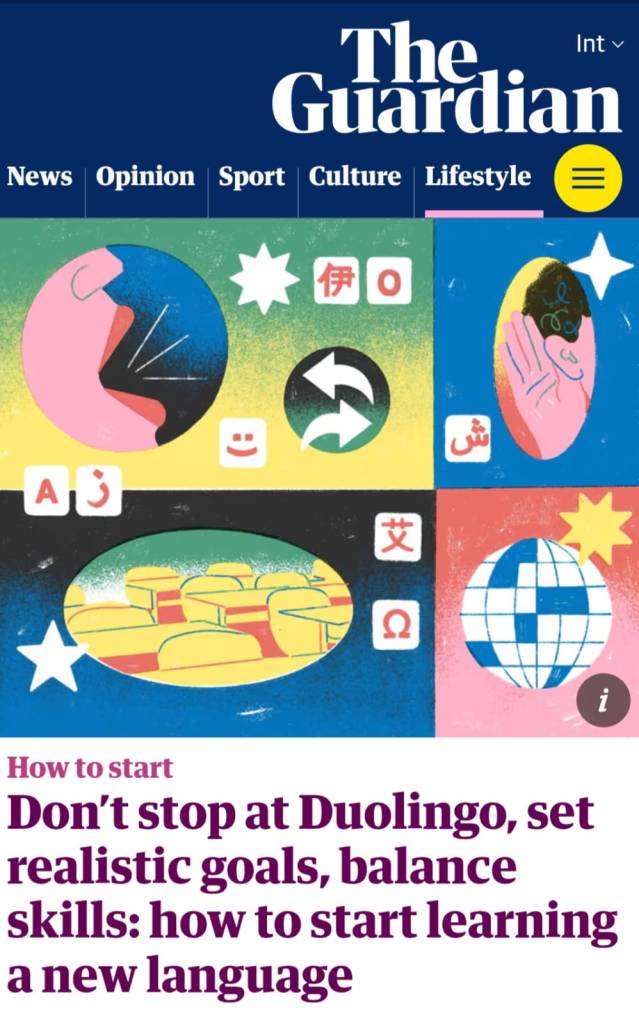
When reading online articles, we could use a mix of sub-skills. Let’s apply those sub-skills to this article on language learning. Click on the link and quickly plan how you would read the article. Then return to this page.
Are you back?
Let’s look at how to approach the article together.
Read the main heading. Look at the image. Predict what the article is about. For instance: I see a hand to a ear. Will the article talk about the importance of listening in language learning?
Read the paragraphs under the heading: Language experts say you should learn in the right order and shift to a growth mindset. That will give you a good idea of what the writer intends to cover. Do keep in mind that in online articles paragraphs have become shorter, so you may need to read the first three or four (short) paragraphs to get an idea of text.
Scan the sub-headings. Is there anything that interests you? If so, stop and do intensive reading. For example, I slowed down when I saw the sub-heading: How do humans learn languages?
Or
You could skim the entire text and then decide if you want to read any paragraph in greater detail. Skimming the text means reading the first sentence, and perhaps the second one as well. At times, the second sentence could be the topic sentence.
When you read next time…
Having a reading strategy helps you become a more effective reader. The next time you read an article or report, try the steps we looked at.
By consciously applying these steps you’ll use your time more efficiently. You’ll be better able to identify and remember key points. And then you could take a well-deserved break, just like that brown-robed person snoozing on the couch. Scroll up to see him.