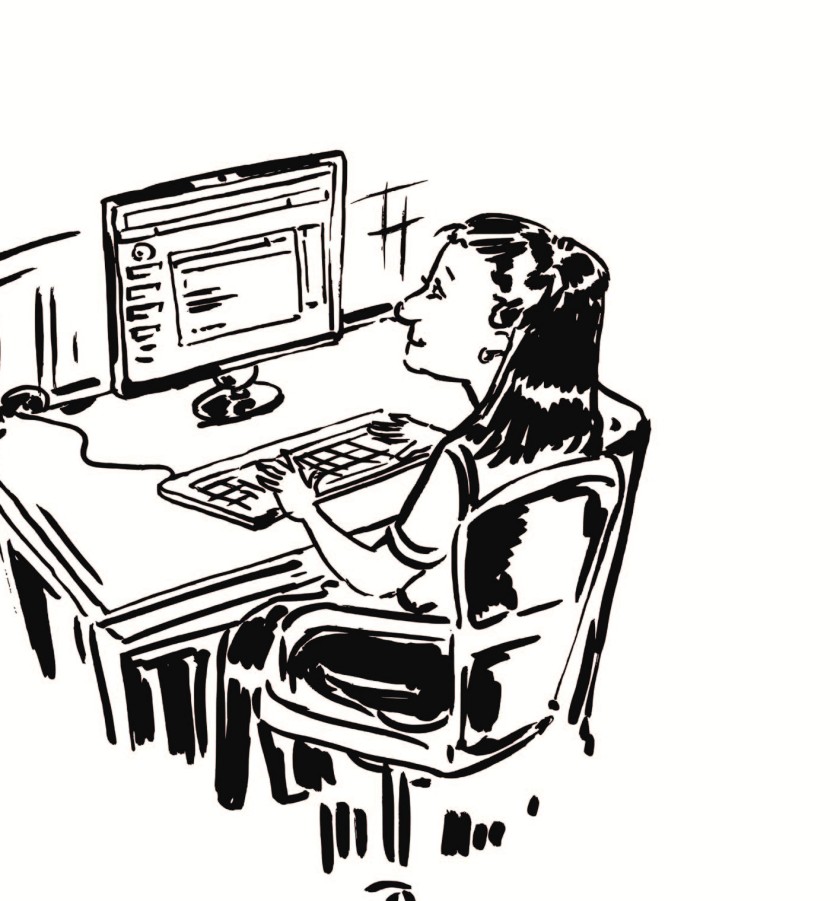
Best website for learning English

Best website for learning English

Students frequently ask me which website they can visit to learn English.

Of course, there are so many out there. In my experience as a trainer, the best one is BBC Learning English. Their material is relevant and engaging.

This is a disclaimer: BBC is not paying me. I’m writing this post so that you could get the most out of the website.

Wait!

Before you google BBC Learning English, let me give you an overview.

The website has a lot to offer. Let’s start:

Vocabulary

The more words you know, the more precisely you can express yourself. When a person has a limited vocabulary, he tends to repeat words and phrases.

Whatever our English levels may be, we all need to expand our range of vocabulary.

It takes time to learn new words. My suggestion to you is this: go slow. Don’t just learn the meaning of words. Practice using them. Become familiar with them. Use them correctly.

I’ve noticed that students at times struggle with phrasal verbs. Do you freak out when you hear the phrase phrasal verbs? Help is at hand. Here’s the definition. If you are working, then you need phrasal verbs, for well, for work. And we all need phrasal verbs for technology.

Vocabulary is not limited to learning phrasal verbs. You also need to learn more words and phrases.

Visit this page to learn words from the news. I liked this episode on fake news.

If you have six minutes to spare, go to 6 minute English. I’ve just listened to the episode Call centres: Are you talking to AI?

English in a minute is a great way to improve your vocabulary. You can hit the nail on the head by learning new phrases within sixty seconds.

Remember, it’s not just about learning new phrases. It’s about using new phrases appropriately. I suggest you select phrases you like and try to use them during the week. Over time, you will be on fire!

Grammar

Are you comfortable with all the tenses that are there? You can confide in me. Be honest.

Tenses with Georgie is a good, fun way to revise tenses.

Prepositions can be confusing. Are you in a train or on a train? Mmm…. Not sure? Check out Prepositions with Georgie and find out.

If you like the idea of learning grammar by watching The Grammar Gameshow , go for it.

There is so much more when it comes to grammar. I know, it seems endless. Visit the main grammar page to find out more.

Pronunciation

Whatever your accent may be, that’s okay. What’s important is that you speak clearly and fluently.

The sounds of English are the building blocks of words. Are you keen to learn these sounds? Do you want to know the difference between voiced and voiceless consonants? You are at the right place.

Check out The Sounds of English on the pronunciation main page. I watched those short videos years ago, and I found them helpful. I hope you do too.

Tim’s Pronunciation Workshop is an effective way to learn about different aspects of pronunciation, such as elision and assimilation. Not familiar with those last two words? No worries. You’re probably doing some it already, in a natural way.

It’s more fun learning pronunciation than it is learning grammar. Do you agree?

Is there anything ‘more’ to do on the website?

On the right hand side of the menu bar, there is an option: More. Click on it with confidence. Don’t hesitate.

I have noticed that students often do not know their level. Do you know yours? Are you at the intermediate level? Upper-intermediate? Advanced?

Here’s the thing. Many students are generous when it comes to deciding which level they are at.

I’ve seen this happen lots of times: a person who is at the intermediate level believes that he is an upper-intermediate student! And the same goes for other levels as well. Many students are bumping themselves up a level.

I’m not a 100% convinced when it comes to online level tests. Having said that, try the level test at BBC learning English. See what you get.

If you enjoy listening to podcasts, try this out. You can listen while travelling.

Do you enjoy drama? I’ve just started listening to The Importance of Being Earnest.

There are many things to do in the ‘more’ section. Find out what works for you.

Before you go…

As you can tell, I’m pretty impressed with this website. It has a depth and breath that I’ve not seen anywhere else.

What do you do now? It’s up to you. If you want to improve your vocabulary, then click on the related links. The same goes for the other topics.

When learning English, be consistent. Consistency is the magic sauce that will help you improve your English.

Apart from BBC Learning English, here are two other websites I recommend.

Happy learning!

Building your vocabulary: one collocation at a time

You can build your vocabulary by using more collocations. Collocations? I hear you ask. Now, what are they?

Collocations are words that naturally appear together. Like old friends from school days, they are comfortable in each other’s company. They enjoy spending time together.

By using collocations, your language becomes richer.

Let’s look at some collocations for make.

Collocations with ‘make’

You wake up at 6:00 o’clock in the morning and immediately make your bed. You turn on the radio and make breakfast. Careful! The milk is boiling. Don’t make a mess.

You receive a text from your best friend from college. Can you make it for the reunion next month? Oh no. You’ve just made a plan with the family.

How many collocations with make so far? Four. Or maybe five. Can you make a guess?

It’s your first day as vice-president and you want to make a good impression. There’s an important meeting happening downtown. You’ve made the arrangements to get there well in time.

At the meeting, you’re client makes some good points. You make some notes. You think to yourself: why isn’t our sales team making more of an effort?

You then make a suggestion. You say, ‘Why don’t we share the research data with you? We normally don’t share it with our clients. But, in your case, we could make an exception.’

Your manager looks at you with stars in his eyes. As you both walk down the stairs, he whispers, ‘We are going to make so much money!’

After lunch, there is a sharp pain in your mouth. Ouch! You can’t ignore the pain anymore. You need to make an appointment right now. Time to visit the dentist.

It’s 10:00 o’clock at night. You are at home. Your family is fast asleep. You look out the window and see the inky black sky. You make believe there is a shooting star streaking above the dark clouds. You make a wish.

Phew! All those collocations make my head spin.

Collocations with ‘risk’

Now, let’s look at business English. How many collocations are there with the word ‘risk’? There are more than you can imagine: Considerable risk. Low risk. Negligible risk. Increased risk. Reduced risk.

And then there is: take a risk; pose a risk; accept a risk; manage a risk; minimize a risk; assess risk; measure risk; and balance risk.

Wait… there’s more: credit risk; political risk; environmental risk; safety risk; and security risk.

How many of these collocations of risk have you used? What can you use in future?

At the risk of overloading you with collocations, let’s briefly look at a word I’m sure you use: budget.

Collocations with ‘budget’

Some collocations with budget are:

prepare a budget

plan a budget

approve a budget

propose a budget

balance the budget

exceed the budget

stick to the budget

Now, we need to budget our time. So, I’ll stop here.

Takeaway

Before you click away, remember this–collocations help us to express ourselves with precision and flexibility. And they widen our range of vocabulary.

Select a collocation that you haven’t used before from the lists above. Use it by the end of tomorrow. By doing so, you will have expanded your vocabulary without much effort.

Does that make sense?

Find out how a dictionary is a treasure trove of collocations.

Image credit: Freepik

Learning English for people in a hurry

People crossing a street in a city

You carry many identities within you. Area sales manager. CEO. Chef. Head of accounts. Homemaker. Entrepreneur. YouTuber. Parent. Part-time painter. Professional dancer. Gardener. Baker. Foodie. The list goes on.

To improve your communication skills, there is an identity that you must embrace: the identity of a student. Yes, you read that right. Look in the mirror. There is a student gazing at you. Just because you’ve left college, that doesn’t mean you have to stop learning.

Where is your classroom? Your classroom is your office. It’s your laptop at home. It’s the unopened newspaper on the table. It’s that Netflix series you are binging on. It’s your favorite business website. It’s the device you are using right now to read this post.

Who is your teacher? You have many. Your clients who send you emails are your teachers. So are the Tedx speakers who inhabit YouTube. So are the ads you see on billboards. In short, your teachers are everywhere. The question is, are you open to being taught?

When I conduct corporate training sessions, what strikes me is the limited range of people’s vocabulary. They are fluent in the jargon of their field. They have good domain expertise. But, when they need to express their views on unfamiliar topics, they are at a loss for words. They are often stumped when they are asked to talk about social issues, culture, and the environment.

The higher up the corporate ladder you climb, the greater will be the demands on your communication skills. As you progress up the ranks, there will be times when you need to present to a wider, more diverse, audience. There will be times when you need to explain complex systems to people from outside your sector. There will be times when you need to be diplomatic to not offend investors or clients. There will be times when you need to speak about broader issues such as employment, climate change, and ethics. For all those times, you would need to speak fluently, effectively, and confidently. To do so, you would need to have a wide range of vocabulary that you could immediately access.

Build your vocabulary

How can you enrich your vocabulary? Be more aware of the words and phrases around you. If you have a client who communicates effectively, find out why. When she writes emails, what phrases does she use? Could you use those same phrases when you write emails?

To learn in a more structured manner, visit BBC Learning English . There will be some words you are familiar with. But, there will be many words that you are not. Be open. Read the definitions for expressions you do not know. And check the ones you think you know. You may not know the precise meaning of a familiar word or phrase. You may be in for a surprise.

Do not use ‘fancy’ words to show off. Use words appropriately. Use the right word at the right time in the right context. Usually, simple words are sufficient. Remember, it’s not just what you say that matters, but also how you say it that matters too.

Listen for phrases you can use

When you watch a panel discussion, how do the panelists interact? Good speakers weave a narrative by referring to what was said before. They are not making isolated statements, but are interacting with one another, creating a coherent, meaningful conversation. Pay attention to the phrases that are used to refer to what was said before. For example, ‘I would like to build on what X just said.’ Or: ‘I partially agree with you, however…’ Could you use such phrases in your next zoom meeting?

Improve your pronunciation

Pronouncing words is a tricky affair. A problem with pronunciation is that when everyone around you is pronouncing a word incorrectly, you do not question that way of pronunciation. How can you escape this invisible loop? Doubt yourself. Personally, I have been often surprised when I checked words I thought I knew how to pronounce. I wish you many such moments. Cambridge dictionary is my go to dictionary.

The magic of awareness

Do you know what is essential for improving your communication skills? Awareness is the key that unlocks the door to better communication skills. Only you can open it.

Be aware of the spoken and written language around you. Be curious about a new word, phrase, or expression. Google it. Think about it. Absorb it. Notice if you come across it again. Decide if it would work for you. If it does, use it. If it doesn’t, no worries. Let it go. Whatever happens, you are expanding your language horizon.

Despite your busy schedule, you’ve read till the end. Bravo! Now, I have a gift for you. It is something that will last forever. That gift is: awareness.

Use it well.

Image credit: Pinterest

Are you using paragraphs?

Paragraphs make your writing easier to read. Make sure you use them effectively.

In this Chinese ink painting, blank space is used to create harmony and balance. The blank space is an integral part of the painting.

When you write, you use words. You also use space.

Using space in emails

Using space thoughtfully will make your writing easier to read.

Let’s look at two examples.

Example 1

Dear X,

We would need to update the technical documentation for product Z. Could we meet tomorrow at 11am at the main conference room? There are two new features that have been proposed by the design team. It would be best if you are present when they make the presentation. That way, you are on board from the start. If you have any questions, do let me know.

Best regards,

Y

Example 2

Dear X,

We would need to update the technical documentation for Product Z.

Could we meet tomorrow at 11am at the main conference room?

There are two new features that have been proposed by the design team. It would be best if you are present when they make the presentation. That way, you are on board from the start.

If you have any questions, do let me know.

Best regards,

Y

Wouldn’t you prefer to receive an email organized like example 2? Just by using space to separate sentences and thoughts, the entire message becomes clearer.

When writing an email, put yourself in the shoes of the reader. The message should be understood without much effort. The reader should not have to read the message a second or a third time.

Using space when messaging

Even when messaging on WhatsApp, think about space.

Which message is easier to read?

Example 3

Hi B, The training session has been finalized. It will be this Friday @ 3pm in the basement. Everyone from Marketing will be there. We have allocated 10 minutes for you to tell us about your initiative. Could you confirm your availability by today, EOD?

Example 4

Hi B,

The training session has been finalized.

It will be this Friday @ 3pm in the basement.

Everyone from Marketing will be there. We have allocated 10 minutes for you to tell us about your initiative.

Could you confirm your availability by today, EOD?

Of course, the second WhatsApp message (example 4) is easier to read. And in that message, the reader knows exactly what is happening, and what she is expected to do.

Unlike the first message (example 3), the second message is crystal clear. And all that changed was the use of space.

The need for space

Many times, emails are not even read properly. People just skim them. (You may be skimming this post right now :)) When skimming, they may miss relevant information.

Use space when writing emails to divide your message into meaningful chunks. This will make it easier for people to read and absorb the main points of your message. Remember, even a sentence can be a paragraph.

Use space when messaging on WhatsApp and other messaging platforms. It will make it easier for people to understand your message, especially when reading on a small screen.

When there is no space in your writing (example 1), the reader gets overwhelmed. They struggle to find the main message.

Have mercy on your reader.

Look again at the ink painting. A bird on a branch. Simple, clear, and effective. That’s how your writing should be.

Use space to give more structure to your writing.

Use space to let your sentences breathe.

Image credit: Pinterest