Five commonly mispronounced business words
How to pronounce the days of the week
3 commonly mispronounced words
Since vs. for
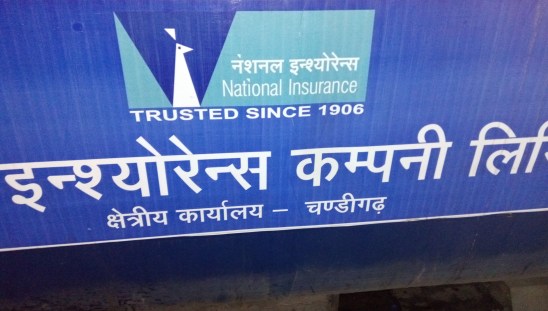
At times, I have heard: “I’ve been working here from 2015.”
Actually it should be: “I’ve been working here since 2015.”
Or one can say: “I’ve been working here for two years.”
Here is how since and for are used:
since + point in time (since 1906)
for + period of time (for 10 years)
We do use from with time expressions, but in a different sense. Here are some examples:
The conference starts from tomorrow.
The shop is open from 9:00 am to 5:00 pm.
And yes, by now you know why the ad is correct: Trusted since 1906.
In fact, from now on, you know the difference between since and for.
“He has a chip on his shoulder.” or does he?

This is a commonly used idiom: he has a chip on his shoulder.
Some people use it to indicate that he is behaving arrogantly, normally due to his success or position. Perhaps they are making a connection between the chip on his shoulder and a microprocessor chip or a blue chip stock. Actually, this is not the meaning of the idiom.
It is not related to being arrogant.
When someone has a chip on his shoulder, he is angry or feels disrespected. And he feels angry/disrespected because he is under the impression that he has been treated unfairly in the past.
And that is what it means to have a chip on one’s shoulder.
A venture capitalist once said that he looks for an entrepreneur who has a chip on her shoulder, as this means that she will try even harder to succeed. Does that make sense?
How many idioms related to war can you think of? Learn about four of them here.
How many Indianisms can you find in this letter?

There are three Indianisms in this letter. They are:
- out of station
Instead one can say: out of town.
2. kindly
This is a very common word in India. Nothing wrong with it, but do keep in mind that outside India, people usually say please instead of kindly.
3. the same
This, like kindly, is a classic example of Indianism. Instead of ‘the same’ one can say: ‘it’.
And so, the full sentence reads:
Please resend it.
For more on Indian English, check out this post.
3 common errors in business email writing

You need to be professional in your communication. It is important not to make errors while writing business emails. If you do make them, it will reflect negatively on you. Make sure that you are not making these errors:
3 common errors in business email writing
Here are three common errors that many people make:
1. This email is with regards to your visit.
It should read: … with regard to your visit.
We use the word ‘regards’ when we say: “Send him my regards!”
Or, when we sign off on an email:
Regards,
Payal
2. I am looking forward to meeting you.
The phrase, looking forward to, is informal. We use it when communicating with friends. For example: I’m looking forward to meeting your cousin.
If you wish to have a more formal tone, then write:
I look forward to meeting you.
Note that it should not read: I look forward to meet you.
The verb should always end in -ing. For example:
I look forward to receiving the book.
I look forward to speaking with you.
In this structure, instead of a verb (speaking, receiving), we can use a noun.
For example:
I look forward to your reply.
I look forward to the presentation.
3. For any clarification, contact me.
This is informal, and it is okay among friends / colleagues (who are friends).
If you wish the tone to be more formal, write:
If you need any clarification, do not hesitate to contact me.
If you need any clarification, please call me at 86393389.
If you need any clarification, please send an email to Tony at: abc@xyz.com
Do not write: If you need any clarification, please contact the undersigned.
In this case, we normally treat clarification as an uncountable noun, so do not add an ‘s’ at the end.
This sounds like a lot of work. The reader will first have to find who this mysterious ‘undersigned’ is.
Remember, in general, try to keep your business communication simple and straightforward.
For more in-depth information on the topic, read how to improve your email writing skills.
Uncountable nouns

On a chilly winter evening in New Delhi, I saw this sign blazing in the dark. ‘Fruit’ is an uncountable noun. And if the owner wished to be grammatically correct, the sign should have read “Shakti Fruit.’
But what are uncountable nouns?
Uncountable nouns are nouns that cannot be counted.
They can be either abstract nouns (love, peace) or concrete nouns (sugar, furniture).
Here are the main points you need to keep in mind:
a. With an uncountable noun, we do not use an ‘s’. And so, we cannot have ‘fruits’.
b. We cannot use indefinite articles (a,an) with uncountable nouns.
We should not say: a fruit.
Let’s look at some common errors made with uncountable nouns:
- “Can I ask for an advice?”
This is incorrect. Advice is uncountable.
You should say: “Can I ask for some advice?”
2. The ten equipments are in the storeroom.
Equipment is uncountable.
Instead, we say: The ten pieces of equipment are in the storeroom.
3. She knows a lot about Japanese business etiquettes.
You guessed it… Etiquette is an uncountable noun.
The sentence should read: She knows a lot about Japanese business etiquette.
And now, I’m sure that you can identify the grammatical error in this photo:

For more on Indian common errors, check out my book.
Watch this video for more on uncountable nouns.
When do I use an apostrophe?

This message is from my local gym. What caught my eye was the unnecessary apostrophe in ‘Saturdays’.
Apostrophes are terrible easy to use. And yet, there are often misused. As in most things in life, you just have to be clear as to how to use them. Let’s find out.
3 ways to use an apostrophe
1. To show possession
girl’s (singular) girls’ (plural)
2. After time expressions
One week’s time
Two weeks’ time (note that the apostrophe in this case comes after the ‘s’)
3. For informal speech
do not becomes don’t
I am becomes I’m
you are becomes you’re
Pay attention when you see: it’s
It’s can be ‘it is’ or ‘it has’. It depends on the context.
Look at these two examples:
a. It’s raining! (It is)
b. It’s been nice speaking with you. (It has)
And that’s all
If you wish to write anything in its plural form, such as protein shakes, push-ups, and Saturdays, there is no need to add an apostrophe. Don’t do it.
And yes, there are exceptions. We use apostrophes when we talk of minding your P’s and Q’s. But, I think you knew that already…
Not sure about its vs. it’s?